
· By Mark Delaney
Lick Mats for Dog Anxiety: Building a Calming Routine That Works
My older dog used to tremble at the first rumble of thunder, and bath night was a two-person operation. The lick mat did not transform him overnight, and I want to be upfront that no product can promise that. What it did was give us a routine, a familiar, food-anchored activity that helps him occupy his mind while the scary thing happens around him. This guide shares that routine in detail, along with the specific setups we use for baths, storms, and short alone time.
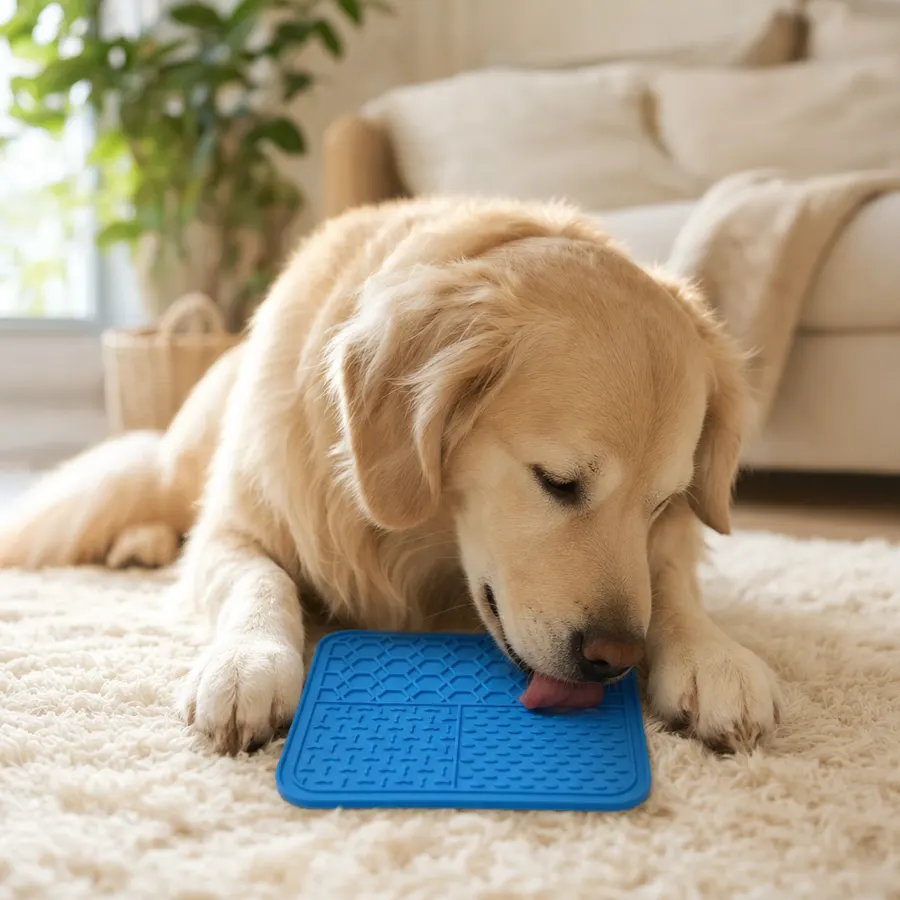
Why licking can help a dog settle
Licking is one of the most natural self-soothing behaviors a dog has. Behavior specialists have long observed that dogs lick when they need to decompress, which is why an unsettled dog so often works on its own paws. A lick mat redirects that instinct toward food and a steady rhythm: lick, taste, repeat, for many minutes at a stretch. The repetition is exactly the point. It gives an anxious mind a single simple job.
Nervous behavior is also far more common than most owners realize, which is worth knowing simply so you stop blaming yourself or your dog.
Prevalence of noise sensitivity, the most common anxiety-like trait in a study of 13,715 pet dogs
The same study found that 72.5 percent of dogs showed at least one anxiety-like behavior. If your dog is jumpy around noise or hates the tub, you are in the majority, and small routine changes are where progress usually starts. For the broader picture of what mats can and cannot do, our guide on whether lick mats are good for dogs lays it out honestly.
The step-by-step calming routine
- Introduce the mat somewhere boring. Living room floor, quiet afternoon, a smear of something irresistible from our safe toppings list. Let your dog finish in peace. Repeat for a few days.
- Name it if you like. A consistent phrase such as "mat time" builds anticipation. Within a week, most dogs trot over at the words.
- Move it closer to the trigger. Serve sessions in the bathroom with the tub dry, near the grooming table with clippers off, or by the crate with the door open.
- Bring it out before the event, not during the panic. The mat should appear while your dog is still calm enough to eat. Timing is the difference between a distraction and a decoration.
- Upgrade the topping for hard moments. Everyday sessions get yogurt. Thunderstorms get frozen peanut butter. Our recipe collection ranks combinations by staying power.
- End on a win. Lift the mat while your dog is still engaged rather than waiting for frustration. You want the memory to be entirely good.
Bath time and grooming
This is where a wall-mounted mat earns legendary status. The LickJoy Mat has suction cups across the back, so it sticks to the tile or glass of your shower at nose height. Load it with the thick, chilled paste from recipe nine in our collection, press it to the wall, and your dog stands still, working on the mat while you work on the shampoo. What used to be the hardest fifteen minutes of the month becomes close to routine.
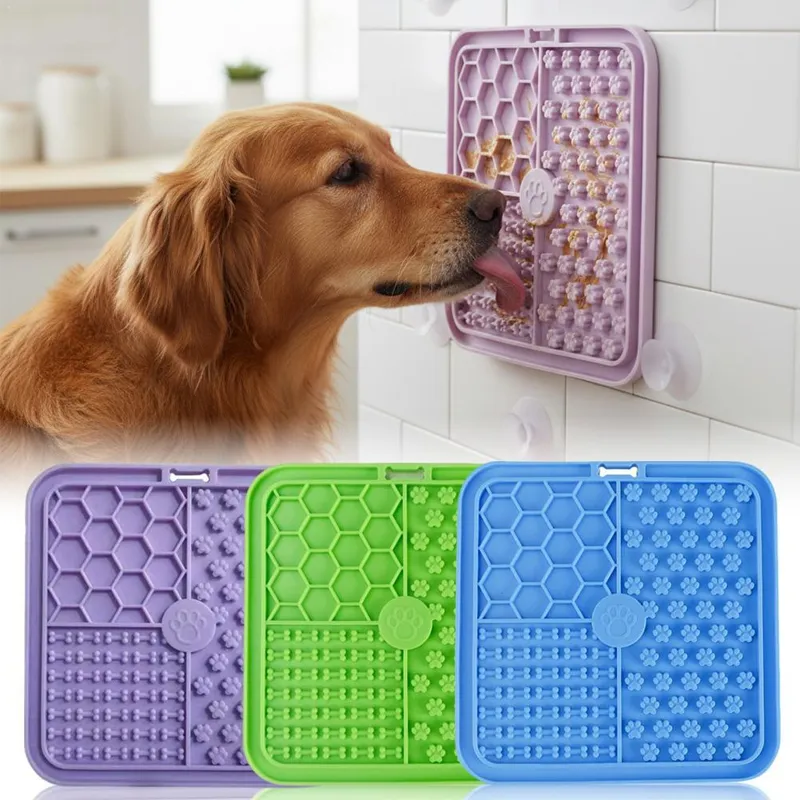
The same setup works for brushing and nail trims: stick the mat to any smooth vertical surface, or lay it flat on the floor and let your dog stand over it while you groom. For puppies meeting the brush for the first time, pair this with the gentler introduction in our puppy guide.
Storms and fireworks
Noise events reward preparation. Watch the forecast, and when a storm is due, prepare a frozen mat in advance, since a frozen topping lasts several times longer than a fresh one and the whole point is outlasting the noise. Our frozen treats guide covers timing and the combinations that freeze best.
Set the mat up in your dog's chosen safe spot, an interior room, a crate with the door open, or wherever your dog naturally retreats. Close the curtains, put on some steady background sound, and serve the mat as the first rumbles arrive. Some dogs will work the mat straight through the storm; others take breaks and return. Both patterns are fine. A dog who refuses food entirely during storms is past the point where a mat helps and belongs in the conversation in the last section of this guide.
Short alone time
For brief departures, the school run, a quick errand, the mat can become part of a leaving ritual that keeps the goodbye low-key. Serve it a few minutes before you go, so your dog is engaged in something pleasant as you slip out, and keep departures and returns boring and unceremonious.
Two honest caveats here. First, keep unsupervised sessions short and only after you have watched enough supervised ones to trust that your dog licks rather than chews. Second, a lick mat is a pleasant distraction for mild fussing, not an answer to true separation distress. A dog who panics, vocalizes for long stretches, or damages doors when alone needs professional guidance, and no topping changes that.
When to bring in more help
A lick mat is one tool in a bigger toolbox that includes exercise, predictable routines, and training. If your dog's worry is intense, worsening, or showing up in new situations, talk to your veterinarian or a qualified behavior professional. They can rule out medical causes and build a plan, and the mat then becomes a genuinely useful piece of that plan rather than a patch over a growing problem.
For most dogs with everyday jitters, though, the routine on this page is a meaningful upgrade to bath night, storm season, and quiet afternoons. Hundreds of owners have built the same habit, and you can read their experiences in our verified reviews. Details on how we develop and pressure-test these routines are on our how we test page, and the mat that anchors all of it is waiting on our homepage.

Mark Delaney · Canine enrichment writer
Mark has spent 12+ years living with high-energy dogs and has hand-tested dozens of lick mats and slow feeders to find what actually keeps dogs busy and calm.
Build the routine with the right mat
Suction cups for the shower wall, two textures for staying power, easy-rinse silicone for the cleanup. The LickJoy Mat was made for exactly this.
Shop the LickJoy Mat →Free US shipping · 30-day money-back guarantee